- December to April is peak dry season for the West & South Coasts (Galle, Weligama, Mirissa, Bentota), the Hill Country (Nuwara Eliya, Ella), and Yala National Park.
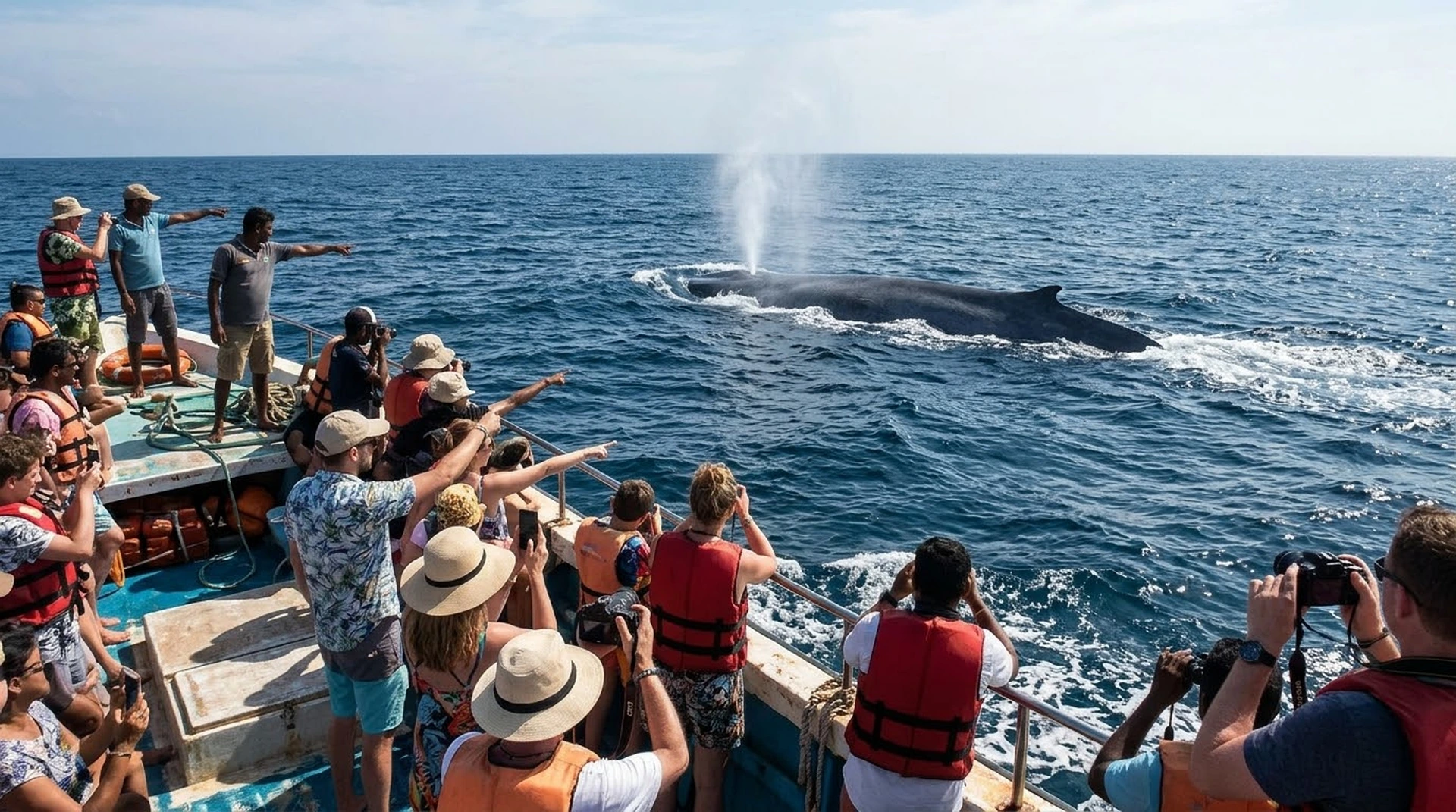
- December to April is also prime marine season off Mirissa to witness resident and migrating Sri Lankan Blue Whales (Balaenoptera musculus indica) feeding along the deep continental shelf just 6–10 nautical miles offshore.
- May to September is peak dry sunshine season for the East Coast (Trincomalee, Nilaveli, Pasikuda), the Cultural Triangle (Sigiriya, Polonnaruwa), and Minneriya/Kaudulla's legendary 'Gathering' of 300+ wild Asian elephants.
- October and early November are lush inter-monsoon shoulder months offering 25–35% boutique hotel savings, emerald waterfalls, and crowd-free UNESCO monuments with morning sunshine and brief late-afternoon showers.
In This 2026–2027 Guide
1. Sri Lanka's Dual-Monsoon Secret Explained in Plain English
Why can a central highland peak divide an island's weather in half? Rising to over 2,500 meters at Sri Lanka's heart, the central mountain massif acts as a giant natural weather shield. From May to September, the Southwest ('Yala') Monsoon carries moisture onto the southwest beaches and western hill slopes—leaving the northern Cultural Triangle and East Coast completely dry, sunny, and glass-calm.
From December to March, the winds reverse: the gentler Northeast ('Maha') Monsoon waters the eastern rice paddies while Galle, Weligama, Mirissa, Bentota, Colombo, and Ella bask in golden 29°C coastal sunshine and crisp 20°C mountain mornings.
- Traveling Nov – Apr? Anchor your beach days in Galle, Weligama, Mirissa, Tangalle, or Bentota.
- Traveling May – Sep? Anchor your beach days in Trincomalee (Nilaveli/Uppuveli) or Pasikuda Bay.
- Cultural Triangle Bonus: Sigiriya, Dambulla, and Polonnaruwa sit in the northern dry zone, enjoying dry, sunny touring across almost 10 months of the year (especially Jan–Sep).
2. Month-by-Month Sri Lanka Weather, Beach & Wildlife Matrix
Use our Colombo operations calendar below to pair your exact holiday window with the sunniest beaches and peak wildlife spectacles:
| Months | Best Sun-Drenched Coasts | Signature Wildlife Spectacles | Pricing & Crowd Level |
|---|---|---|---|
| December – March | South & West Coasts (Galle, Mirissa, Weligama, Bentota) + Maldives | Mirissa Sri Lankan Blue Whales (Balaenoptera musculus indica), Yala leopards & Bundala migratory birds | Peak Season · Book 3–6 months ahead for boutique villas & train seats |
| April | South/West transition into East Coast; warm everywhere | Late-season Mirissa Sri Lankan Blue Whales, Udawalawe elephants & Sinhala/Tamil New Year festivities (Apr 13–14) | High Value after Easter · Warm tropical seas on both coasts |
| May – June | East Coast (Trincomalee, Nilaveli, Pasikuda) & Cultural Triangle | Wilpattu leopards & sloth bears (palu berry season in June), Pigeon Island reef sharks & turtles | Exceptional Value · 20–30% lower hotel tariffs & uncrowded UNESCO sites |
| July – August | East Coast (Trincomalee, Pasikuda, Arugam Bay surf) & Cultural Triangle | Minneriya & Kaudulla 'The Gathering' (250–350+ wild elephants), Trincomalee Blue Whales, Kandy Esala Perahera | European Summer Peak · Book Kandy Perahera & East Coast resorts early |
| September | East Coast (Pasikuda, Trincomalee) & Cultural Triangle; Ella bright mornings | Peak Minneriya/Kaudulla Elephant Gathering & Yala quieter Block 5 safaris | Golden Shoulder · Glorious dry-zone weather without August crowds |
| October – Mid-November | Flexible Island-Wide Boutique & Wellness (Mornings sunny, late PM showers) | Udawalawe year-round elephants, emerald tea waterfalls in full cascade, Ayurveda retreats | Lowest Rates of the Year · Ideal for wellness, spa & slow villa escapes |
3. Marine Accuracy: Witnessing Authentic Sri Lankan Blue Whales off Mirissa
Sri Lanka's southern continental shelf plunges sharply into the deep submarine Trincomalee and Dondra canyons just a few miles off Mirissa Point. Unlike high-latitude whale populations that migrate to polar waters, a unique subspecies—the Sri Lankan or Pygmy Blue Whale (Balaenoptera musculus indica)—thrives in the nutrient-rich tropical Indian Ocean.
Recognizable by its sleek slate-blue dorsal ridge, towering vertical blow (up to 9 meters high), and majestic tail-fluke dive into deep sapphire water, the Sri Lankan Blue Whale is the largest animal ever to inhabit our planet. Between December and April, calm dawn seas out of Mirissa harbor allow ethical marine vessels to observe Sri Lankan Blue Whales alongside acrobatic pods of hundreds of spinner dolphins—returning you to shore before lunchtime.
4. Cultural Festivals That Elevate (and Fill Up) Specific Dates
Two dates on the Sri Lankan calendar transform cultural towns into unforgettable living pageants—and require early planning. In July or August (timed to the Esala full moon), Kandy hosts the 10-night Esala Perahera, one of Asia's oldest Buddhist processions featuring traditional Kandyan drummers, fire dancers, and ceremonial regalia.
Every calendar month also features a 'Poya' Full Moon public holiday. On Poya days, temples glow with oil lamps and white-clad devotees (making Anuradhapura, Mihintale, or Kandy extraordinarily atmospheric), while alcohol sales pause for 24 hours across hotels and restaurants.
Frequently Asked Questions
Is July and August a bad time to visit Sri Lanka because of the monsoon?
Not at all—July and August are actually two of the best months of the entire year! The Cultural Triangle (Sigiriya, Polonnaruwa, Dambulla), Kandy, Ella, Minneriya National Park (during the world-famous Elephant Gathering), and the entire East Coast (Trincomalee and Pasikuda) enjoy hot, sunny, dry summer weather. Simply swap Galle/Mirissa beach stays for Trincomalee or Pasikuda.
What clothes should I pack for Sri Lanka's contrasting climate zones?
Pack breathable linen and cotton for 28–31°C coastal and Cultural Triangle days, modest lightweight trousers/shawls covering shoulders and knees for temples, and one warm fleece or light down layer for Nuwara Eliya and Horton Plains—where altitude drops nighttime temperatures to 10–14°C year-round.
When does Yala National Park Block 1 close for annual drought maintenance?
Wildlife authorities occasionally close Yala Block 1 for roughly 4–6 weeks around September to mid-October if late-summer dry conditions deplete natural waterholes. Even during a Block 1 pause, adjacent Yala Block 5, Lunugamvehera, Wilpattu, Udawalawe, and Minneriya remain completely open with superb private game viewing.
Can we see whales on the East Coast in summer too?
Yes! Between May and August, calm summer seas off Trincomalee (Nilaveli) offer morning sightings of Sri Lankan Blue Whales, sperm whales, and spinner dolphins—paired effortlessly with snorkeling over shallow coral gardens at Pigeon Island National Park.